For contractors, September and early fall are the best time to get ahead of those calls.
Heating equipment should be checked before it is needed every day. That gives contractors time to identify problems, order parts and correct installation issues before customers are depending on the equipment to keep their buildings comfortable.
Furnaces, heat pumps and boilers all require different checks, but the goal is the same: make sure the equipment can operate reliably when temperatures start dropping across Ontario.
Start With the Equipment That Has Been Sitting All Summer
One of the biggest differences between cooling and heating season is that much of the heating equipment may not have operated for several months.
A furnace installed beside an air conditioner may have been using its blower throughout the summer, but the burners, gas valve, ignition system and heating controls may not have operated since spring.
A hydronic boiler may have been almost completely inactive during the summer except for domestic hot water applications.
Even a heat pump that has been cooling all summer has not necessarily been tested properly in heating mode.
That is why simply confirming that the thermostat turns on is not enough.
A proper pre-season inspection should confirm that the complete heating sequence works as intended.
Furnace Checks Before the First Heating Calls
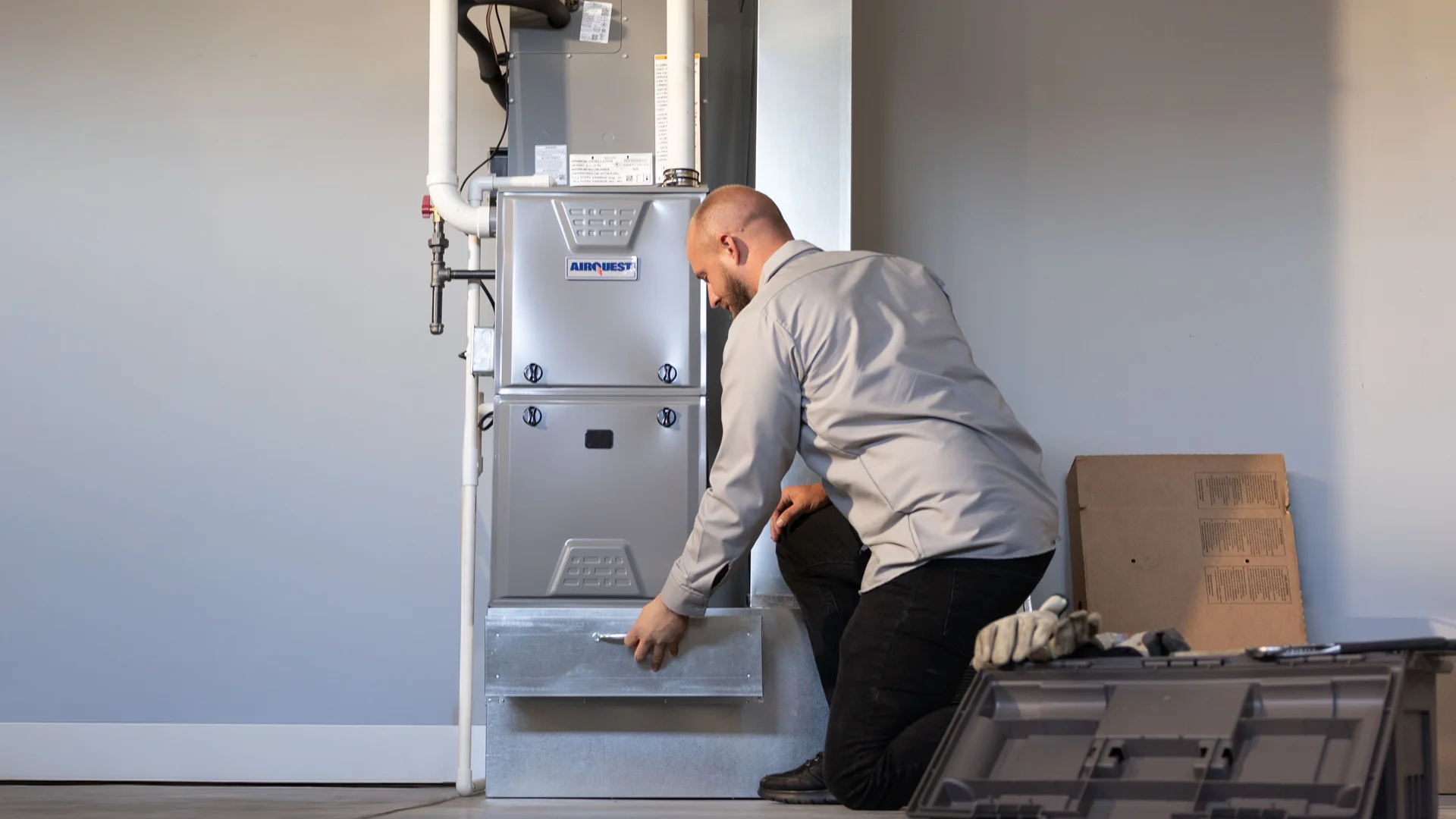
Gas furnaces remain common across Ontario, and early-season furnace calls tend to follow familiar patterns.
The thermostat calls for heat, the inducer starts, but the furnace never lights. The burners ignite but shut down seconds later. The blower runs but the house does not warm properly. Sometimes the furnace operates, but airflow or combustion problems have been developing unnoticed.
Before heating season, contractors should run the furnace through a complete heating cycle and watch what happens from beginning to end.
The ignition system is an obvious place to start. Flame sensors can become dirty, igniters can weaken and electrical connections can loosen. These are relatively small issues when found during maintenance, but they become urgent service calls when the temperature drops.
Burner operation should also be checked carefully. The flame should be stable and combustion should be verified using proper instruments rather than judging operation only by appearance.
Gas pressure, venting and condensate drainage should be inspected where applicable.
High-efficiency furnaces also depend on their condensate systems operating properly. A blocked drain, poorly pitched line or partially restricted trap can create intermittent problems that may not appear during a quick startup test.
Airflow matters just as much as combustion.
A furnace can have perfectly functioning burners and still perform poorly if airflow is restricted. Filters, blower wheels, return-air restrictions, closed registers and improperly configured blower settings can all affect temperature rise and equipment operation.
Before leaving the system, contractors should confirm that the furnace is not simply producing heat, but moving that heat through the building properly.
Heat Pumps Need to Be Tested in Heating Mode
Heat pumps deserve extra attention before winter because cooling operation does not tell the full story.
A heat pump can cool a building properly throughout July and August and still have a problem that only appears when the reversing valve changes position and the system begins heating.
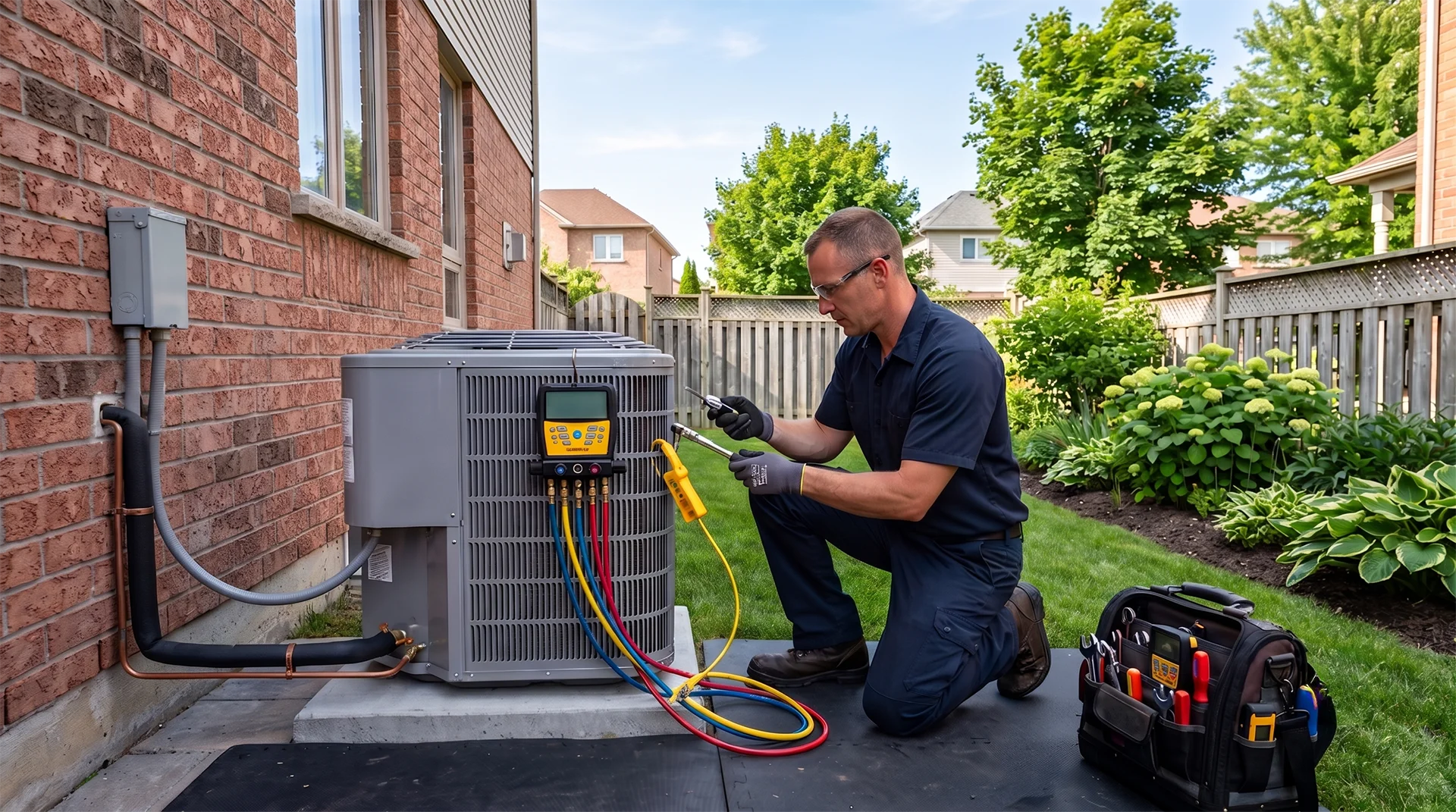
Contractors should switch the equipment into heating mode and allow it to operate long enough to verify stable performance.
That means checking refrigerant operation under the correct conditions, confirming the reversing valve is functioning properly and making sure indoor and outdoor airflow are not restricted.
Outdoor coils should be inspected for dirt and physical blockage. Clearances around the unit matter as well, particularly once snow begins accumulating around outdoor equipment.
Drainage is another area that becomes more important during winter operation.
During heating mode, the outdoor coil can accumulate frost. The system will periodically enter defrost mode to clear it. The resulting water needs somewhere to go.
Poor drainage around the outdoor unit can lead to ice buildup beneath or around the equipment. In severe cases, that ice can interfere with airflow, damage components or create unnecessary service calls.
Contractors should also verify that the system enters and exits defrost correctly.
A heat pump covered in ice is not automatically experiencing a refrigerant problem. Failed sensors, control issues, airflow restrictions and drainage problems can all affect defrost performance.
Finding those issues in September is much easier than troubleshooting an iced-up outdoor unit during a January service call.
Check Backup Heat Before It Is Actually Needed
Many heat pump systems include some form of backup or supplemental heating.
Depending on the installation, that may be electric resistance heat, a furnace in a dual-fuel configuration or another heating source.
The backup heat should be tested before winter.
This is particularly important because the primary heat pump may operate normally during mild fall weather. A problem with the auxiliary heat source might remain hidden until temperatures become much colder.
Thermostat configuration should also be checked.
Incorrect staging, balance-point settings or equipment configuration can result in unnecessary backup heat operation, poor comfort or higher energy use.
Heat pump installations have become more common, but good system setup still matters as much as the equipment itself.
The outdoor unit, indoor coil, air handler or furnace, thermostat and controls all have to work together properly.
Boiler Season Brings a Different Set of Problems

Hydronic systems have their own pre-season checklist.
Unlike forced-air equipment, boilers depend on proper water circulation through the entire system. Problems with pressure, pumps, valves or trapped air can leave parts of a building cold even when the boiler itself is operating.
Contractors should begin by checking system pressure and inspecting for signs of leakage.
Expansion tanks should be checked as well. A failed or improperly charged expansion tank can cause pressure fluctuations and may lead to relief-valve discharge.
Circulation pumps should be operated and checked for proper movement of water through the system.
Zone valves, thermostats and controls should also be tested individually where multiple zones are installed.
A boiler that fires correctly does not guarantee that every zone is receiving heat.
Air trapped in the system can also create noise, poor circulation and inconsistent heating. Air separators, automatic vents and other hydronic components should be inspected as part of the system rather than treating the boiler as an isolated piece of equipment.
For condensing boilers, the condensate system requires attention just like it does on high-efficiency furnaces.
The condensate trap and drain should be clean and unrestricted, and the venting system should be inspected according to the manufacturer’s requirements.
Don’t Ignore the Distribution Side
Heating equipment often gets blamed for problems that are actually caused by the rest of the system.
With forced-air equipment, ductwork and airflow can have a major effect on comfort.
A high-efficiency furnace or cold-climate heat pump cannot perform properly if return air is restricted or supply airflow is poorly distributed.
Contractors should pay attention to dirty filters, undersized return ducts, damaged flex duct, blocked registers and incorrect blower settings.
Heat pump systems are particularly sensitive to airflow. Poor airflow can affect capacity, refrigerant pressures, defrost behaviour and overall system efficiency.
Hydronic systems have similar issues on the water side.
Incorrect pump sizing, poor balancing, stuck zone valves or air in the system can prevent heat from reaching the areas that need it.
Good equipment cannot compensate for a badly performing distribution system.
Controls and Thermostats Deserve a Proper Check
Thermostats are often treated as a minor accessory, but they control how the entire system operates.
Before heating season, contractors should verify that thermostats are configured for the actual equipment installed.
This becomes more important with multi-stage furnaces, inverter heat pumps, dual-fuel systems and systems with auxiliary electric heat.
A thermostat configured for the wrong equipment type can create strange operating behaviour that looks like an equipment problem.
Heating and cooling changeover settings, staging, fan control and auxiliary heat configuration should all be reviewed when necessary.
For commercial equipment, building controls, scheduling and rooftop-unit thermostats should also be checked before tenants begin requesting heat.
Rooftop Heating Should Be Started Before the Weather Turns

Commercial rooftop units deserve the same pre-season attention as residential equipment.
Many rooftop units have been operating in cooling mode throughout the summer while their heating sections remained unused.
Before heating demand increases, contractors should check burner operation, ignition, safeties, filters, airflow and controls.
Economizer operation should also be inspected where equipped.
Commercial buildings can create especially frustrating service calls when multiple problems overlap. A rooftop unit may technically produce heat while poor airflow, failed controls or incorrect economizer operation prevents the space from reaching temperature.
Running the equipment before the first cold week gives contractors time to identify those problems without the pressure of an uncomfortable building full of occupants.
ERVs and Indoor Air Quality Equipment Matter More Once Buildings Close Up
Heating season also changes how buildings are used.
Windows stay closed, outdoor air becomes colder and homes spend more time operating as closed environments.
That makes ventilation equipment increasingly important.
ERVs should be inspected before winter operation. Filters and cores should be checked and cleaned according to manufacturer instructions, exterior intake and exhaust locations should be clear and the unit should be operating correctly.
Ventilation problems that were hardly noticeable during summer can become much more obvious during winter.
The same applies to humidifiers and other indoor air quality equipment that may have been inactive during the cooling season.
Checking these components while performing heating maintenance can prevent another trip later.
Fall Is Also the Time to Check Inventory
Heating season preparation is not only about equipment already installed in the field.
Contractors should also look at what they are likely to need over the next several months.
Waiting until the first major cold spell to start looking for furnaces, heat pumps, boilers, thermostats or common replacement components creates unnecessary pressure.
The busiest weeks of heating season are exactly when contractors need fast access to equipment.
That means reviewing upcoming installations, common service requirements and equipment availability before demand increases.
For contractors working on a mix of residential and commercial projects, that can include furnaces, cold-climate heat pumps, boilers, air handlers, coils, thermostats, ventilation equipment and rooftop units.
Having the correct equipment available does not eliminate every problem, but it removes one major variable when schedules become busy.
The First Cold Week Shouldn’t Be the First Test
Every heating season produces emergency calls. That will not change.
What contractors can control is how many preventable problems reach that stage.
A furnace should not wait until the first freezing night to discover that its flame sensor is failing.
A heat pump should not reach January before anyone checks whether its defrost cycle works.
A boiler should not wait until occupants complain about cold rooms before someone discovers a circulation problem.
Pre-season checks give contractors time.
Time to diagnose properly. Time to order parts. Time to correct airflow. Time to test controls. Time to replace equipment when replacement makes more sense than another repair.
Late August and September may still feel like cooling season, but for HVAC contractors, heating season has already started.
The contractors who prepare early are usually the ones who spend less time reacting once the weather changes.