As temperatures drop across Ontario, HVAC contractors start receiving a familiar type of service call: a homeowner notices frost on their outdoor heat pump, sees vapour rising from the unit or experiences a temporary interruption in heating.
In many cases, nothing is wrong. The heat pump is simply running its defrost cycle.
However, there is a significant difference between normal frost accumulation and excessive ice buildup that compromises system performance. Understanding that difference can help contractors diagnose problems more accurately, reduce unnecessary service calls and deliver more reliable installations throughout the heating season.
Why Do Heat Pumps Develop Frost in Winter?
During heating operation, an air-source heat pump extracts thermal energy from outdoor air and transfers it indoors. As refrigerant absorbs heat through the outdoor coil, the coil surface can become colder than the surrounding air.
When moisture comes into contact with a coil that is below freezing, frost can begin to accumulate.
Interestingly, frost formation is not always worse during the coldest days of winter. Temperatures around the freezing point, combined with high humidity, fog or wet snow, can create particularly favourable conditions for frost buildup.
This is especially relevant in Southern Ontario, where winter temperatures frequently fluctuate above and below freezing.
As frost accumulates, it restricts airflow through the outdoor coil and reduces heat transfer. The defrost cycle removes this accumulation and allows the system to maintain effective heating operation.
Even modern cold-climate heat pumps designed specifically for Canadian winters require periodic defrosting under certain operating conditions.
How Does a Heat Pump Defrost Cycle Work?
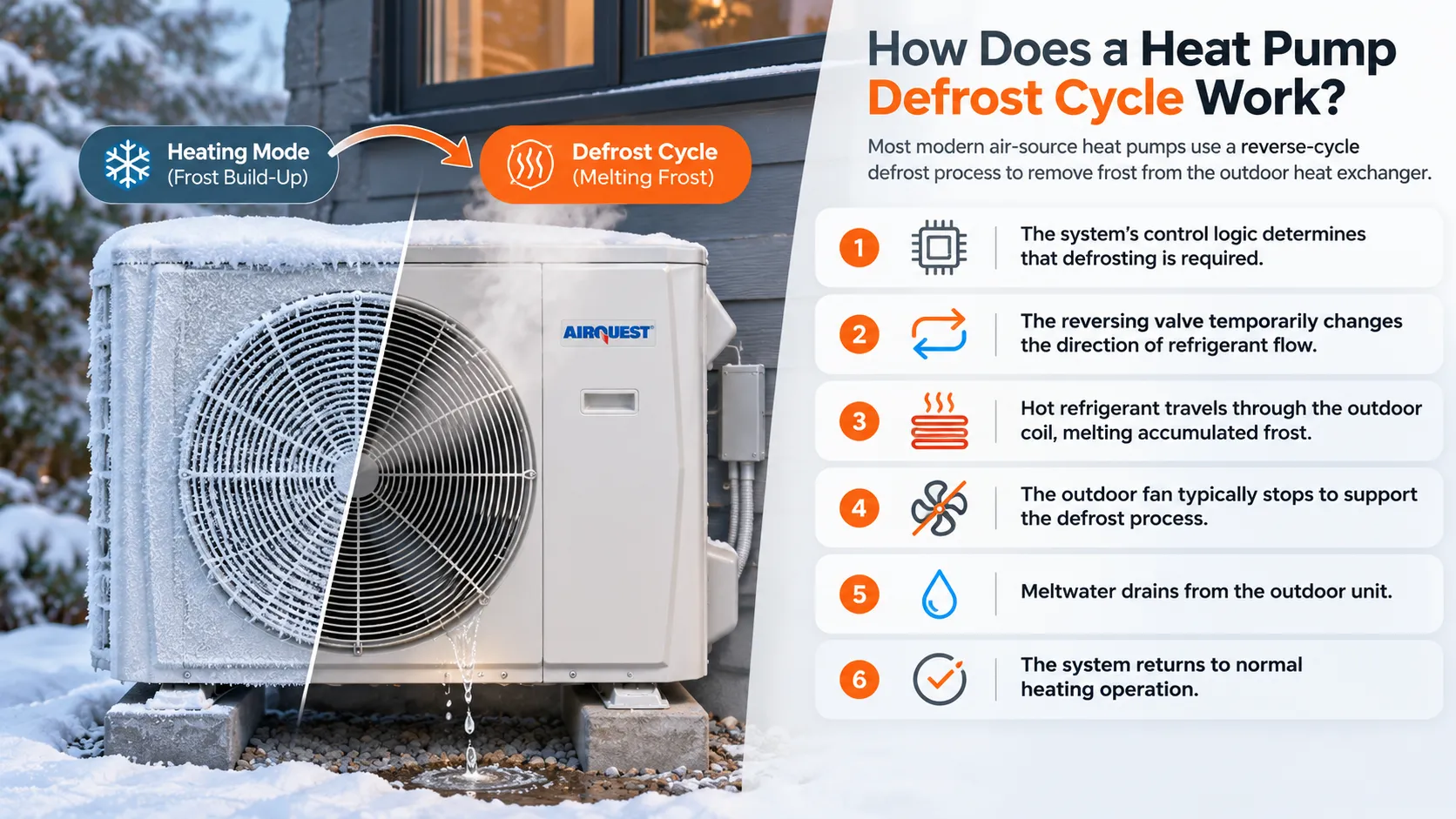
Most modern air-source heat pumps use a reverse-cycle defrost process to remove frost from the outdoor heat exchanger.
During a typical defrost cycle:
- The system’s control logic determines that defrosting is required.
- The reversing valve temporarily changes the direction of refrigerant flow.
- Hot refrigerant travels through the outdoor coil, melting accumulated frost.
- The outdoor fan typically stops to support the defrost process.
- Meltwater drains from the outdoor unit.
- The system returns to normal heating operation.
Depending on the equipment and system configuration, auxiliary heating may operate during this process to maintain indoor comfort. Some ductless systems temporarily pause or reduce indoor airflow instead.
The exact defrost sequence varies between manufacturers and equipment models.
For a more detailed explanation of heat pump operation, Natural Resources Canada provides a comprehensive guide to heating and cooling with a heat pump.
Time-Temperature vs. Demand Defrost
Heat pumps generally use two common approaches to determine when defrosting is necessary.
Time-Temperature Defrost
This approach uses operating time and temperature conditions to determine when a defrost cycle should begin.
Although effective, some time-temperature strategies may initiate defrosting when relatively little frost has accumulated, resulting in unnecessary interruptions to heating operation.
Demand Defrost
Demand defrost uses sensor readings and control algorithms to determine when frost accumulation is likely affecting system operation.
By initiating defrost cycles according to operating conditions, this approach can reduce unnecessary heating interruptions and associated energy consumption.
For contractors specifying equipment for Canadian winters, understanding the manufacturer’s defrost control strategy is an important part of equipment selection.
What Does Normal Heat Pump Defrosting Look Like?
Several operating characteristics may appear concerning to homeowners but are entirely normal during defrost.
These include:
- A thin layer of frost forming on the outdoor coil.
- A visible cloud of white vapour rising from the outdoor unit.
- Temporary changes in compressor or refrigerant-flow sounds.
- The outdoor fan stopping briefly.
- A temporary reduction or interruption in indoor heating.
- Water draining beneath the outdoor unit.
- Automatic return to normal heating operation.
A defrost cycle typically lasts several minutes. However, its duration and frequency depend on outdoor temperature, humidity, equipment design and operating conditions.
There is no universal defrost interval that applies to every heat pump.
The most important indication of proper operation is that the cycle removes frost sufficiently to restore effective airflow and that the system resumes normal heating.
The Heating, Refrigeration and Air Conditioning Institute of Canada (HRAI) also provides a useful explanation of air-to-air heat pump defrost operation that contractors can share with homeowners.
When Is Heat Pump Icing a Problem?
While periodic frost accumulation is expected, persistent or excessive icing requires investigation.
| Normal Operation | Potential Problem |
|---|---|
| Light frost on the outdoor coil | Thick, persistent ice covering the coil |
| Brief heating interruption | Extended loss of heating |
| White vapour during defrost | Burning smell or actual smoke |
| Temporary outdoor fan stoppage | Fan failing to operate when required |
| Meltwater draining away | Excessive ice accumulating inside the base pan |
| Frost clearing during defrost | Ice remaining after repeated cycles |
| Defrost frequency responding to weather | Repeated defrost cycles without effective ice removal |
When the outdoor coil remains heavily iced, the system may struggle to maintain heating capacity and indoor comfort. Continued operation under these conditions may also place additional stress on system components.
If ice begins interfering with fan movement or the system fails to restore heating after defrosting, the equipment should be assessed by a qualified HVAC technician.
Common Causes of Excessive Heat Pump Ice Buildup
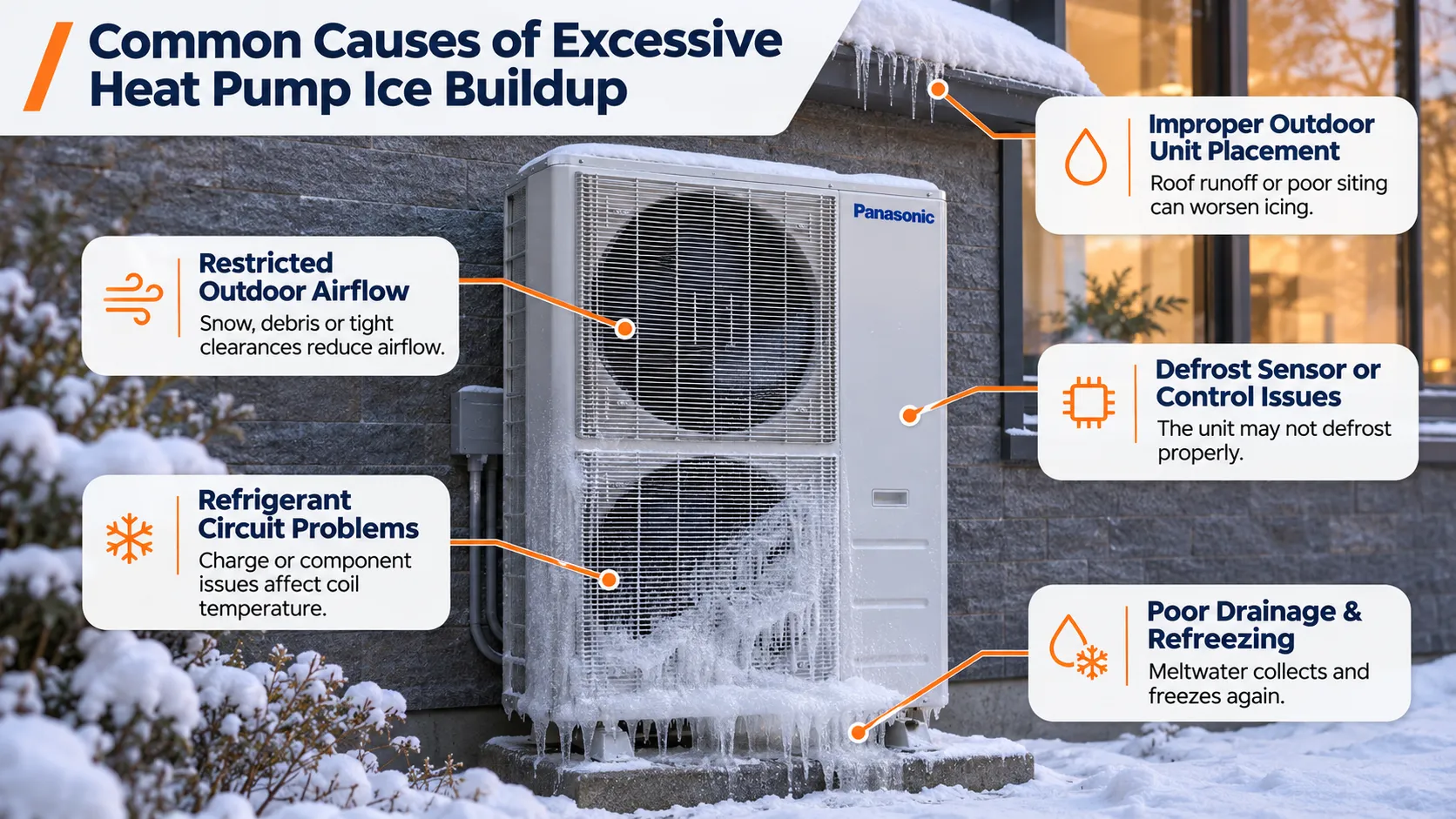
1. Restricted Outdoor Airflow
Snow, leaves, debris and inadequate installation clearances can restrict airflow through the outdoor heat exchanger.
Equipment installed too close to walls, fences or other mechanical equipment may also experience airflow problems if manufacturer requirements are not followed.
Contractors should consider not only the immediate installation environment but also how snow accumulation and surrounding landscaping may affect airflow throughout the winter.
2. Poor Drainage and Refreezing
Defrosting produces meltwater that must drain away from the outdoor unit.
If water collects beneath the equipment or inside the base pan, it can refreeze and gradually accumulate. In severe cases, ice may interfere with fan operation or damage components.
Proper mounting height and drainage planning are particularly important in Canadian installations.
Where applicable, contractors should also review manufacturer requirements for base pan heaters and cold-weather drainage accessories.
3. Defrost Sensor or Control Issues
Faulty temperature sensors, incorrect sensor positioning or control board problems can prevent a heat pump from initiating or completing a defrost cycle correctly.
Contractors should verify sensor readings and operating sequences against the manufacturer’s service documentation.
For example, Bosch provides model-specific installation and service resources through its Canadian heat pump technical documentation library.
4. Refrigerant Circuit Problems
An incorrect refrigerant charge, refrigerant leak, metering device problem or reversing valve malfunction may affect coil temperatures and defrost performance.
Ice accumulation alone is not sufficient evidence of a refrigerant charge issue. A complete diagnostic assessment is required before making adjustments.
Contractors should follow manufacturer-approved diagnostic procedures rather than relying solely on operating pressures or visible frost patterns.
5. Improper Outdoor Unit Placement
An outdoor unit installed beneath a roofline without adequate protection may be exposed to falling snow, melting ice and runoff.
Even a properly functioning defrost system may struggle when external water repeatedly freezes on the equipment.
Installation location is just as important as equipment selection.
Additional information about common heat pump operating issues and excessive icing is available in Carrier Canada’s heat pump service and maintenance guide.
Heat Pump Winter Installation Checklist for Contractors
A reliable cold-climate installation starts before the equipment is commissioned.
HVAC contractors should verify the following:
- Outdoor unit elevation appropriate for expected snow accumulation.
- Manufacturer-required service and airflow clearances.
- Unobstructed meltwater drainage.
- Protection from direct roof runoff and falling ice.
- Correct refrigerant charge according to manufacturer specifications.
- Proper temperature sensor operation.
- Correct thermostat and auxiliary heating configuration.
- Functional outdoor fan and reversing valve operation.
- Defrost operation verified using manufacturer-approved testing procedures.
- Base pan heater requirements, where applicable.
Contractors should also explain normal defrost operation to homeowners during system handover.
A short conversation about frost, white vapour and temporary heating interruptions can prevent unnecessary service calls later in the season.
For professionals looking to strengthen their product knowledge and installation expertise, Nordics offers HVAC technical training covering a range of residential and commercial systems.
Does a Defrost Cycle Affect Heat Pump Efficiency?
During defrosting, the heat pump temporarily redirects energy towards clearing the outdoor coil instead of delivering heat to the building.
This interruption, combined with potential auxiliary heating operation, can affect overall energy consumption.
However, defrosting is necessary. Allowing frost to accumulate continuously would restrict heat transfer and reduce system performance.
The objective is not to eliminate defrost cycles but to ensure they occur when necessary and operate effectively.
Equipment selection, installation quality, control configuration and outdoor operating conditions all influence seasonal performance.
In certain applications, dual-fuel heating systems may provide additional flexibility by combining heat pump operation with a compatible furnace and control strategy.
Choosing the Right Heat Pump for Canadian Winters
Cold-climate performance involves more than the minimum outdoor operating temperature advertised on a product specification sheet.
When selecting equipment, contractors should also evaluate:
- Available heating capacity at low outdoor temperatures.
- Compressor modulation range.
- Defrost control strategy.
- Outdoor coil and base pan design.
- Supplemental heating integration.
- Installation and service requirements.
- Availability of technical documentation and support.
Nordics supplies a range of heating and cooling solutions from leading manufacturers, including:
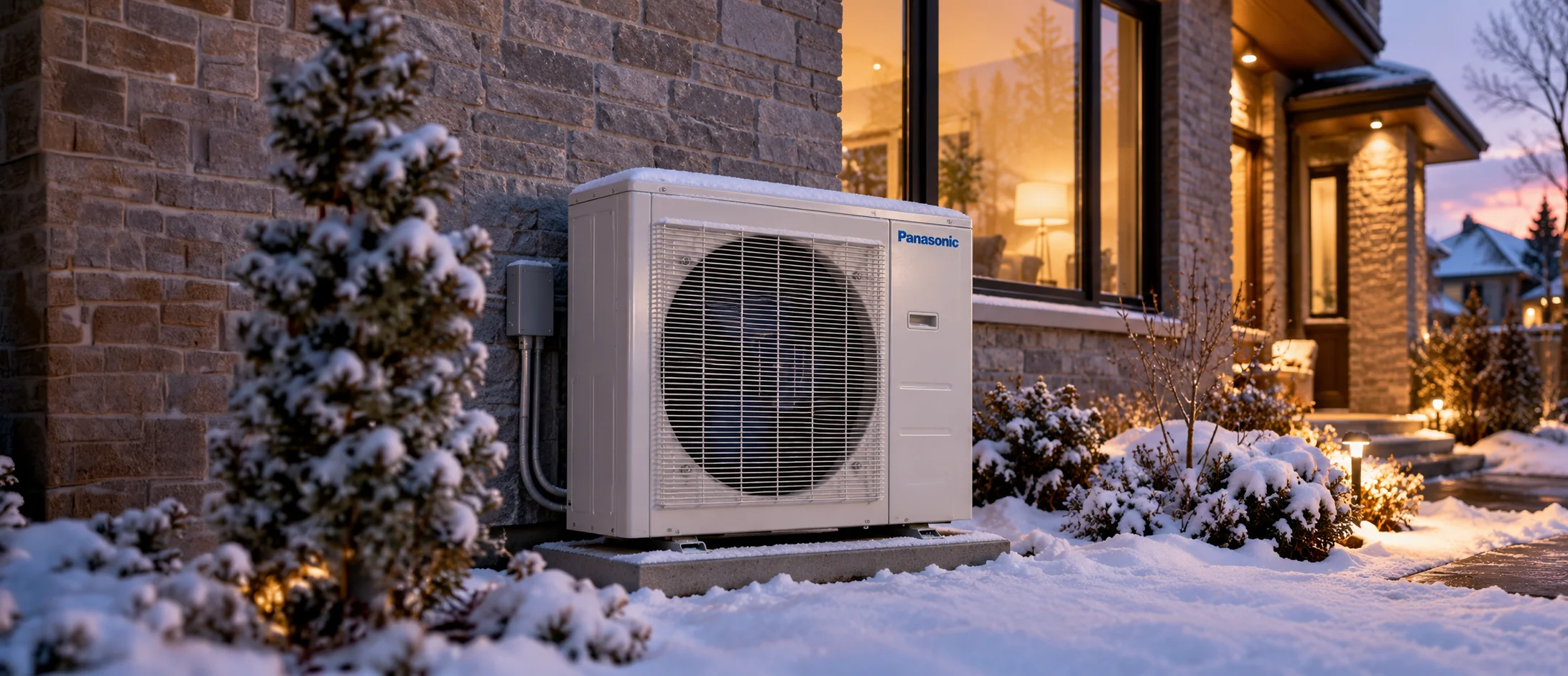
Panasonic Heat Pumps
Panasonic HVAC systems include ductless, multi-zone and centrally ducted solutions for different residential and commercial applications.
The Panasonic INTERIOS Central Heat Pump provides another option for contractors working on centrally ducted heating and cooling projects.
Bosch Heat Pumps
The Bosch IDS Central Heat Pump uses inverter-driven technology to adjust compressor operation according to heating and cooling requirements.
Contractors should evaluate the specific model’s low-temperature capacity, operating limits and installation requirements when designing a cold-climate system.
Airquest Heat Pumps
Airquest HVAC systems, part of the Carrier family, include residential heat pumps, ductless systems and commercial heating and cooling equipment.
The range provides contractors with equipment options for different project requirements, building types and system configurations.
Whether the project involves a retrofit, new construction or complete system replacement, selecting the appropriate equipment and following its installation requirements are essential to achieving reliable winter performance.
Frequently Asked Questions About Heat Pump Defrost Cycles
How often should a heat pump go into defrost mode?
There is no fixed interval that applies to every heat pump. Defrost frequency depends on outdoor temperature, humidity, frost accumulation and the equipment’s control strategy.
Frequent defrosting during damp weather near freezing may be normal, provided the system effectively clears frost and resumes heating.
Why does a heat pump produce white vapour during winter?
During defrosting, accumulated frost melts as the outdoor coil warms. This process can produce a visible cloud of condensed moisture that resembles steam.
This is generally normal and should not be confused with actual smoke or a burning smell.
Is it normal for a heat pump fan to stop during defrost?
Yes. Many heat pumps temporarily stop the outdoor fan during defrost to help warm the outdoor coil and remove accumulated frost.
The fan should resume operation according to the equipment’s normal heating sequence.
Why does a heat pump keep freezing after defrosting?
Persistent icing may result from restricted airflow, inadequate drainage, faulty sensors, refrigerant circuit problems or malfunctioning defrost controls.
A qualified technician should investigate the underlying cause rather than repeatedly forcing the equipment into defrost mode.
Do cold-climate heat pumps still need defrost cycles?
Yes. Cold-climate heat pumps are designed to maintain heating operation at lower outdoor temperatures, but frost can still accumulate when environmental conditions allow it.
Effective defrost management remains an important part of cold-weather operation.
Should homeowners manually remove ice from a heat pump?
Homeowners should avoid using sharp tools, boiling water or other aggressive methods to remove ice, as these may damage equipment components.
Loose snow around the equipment can be cleared safely, following manufacturer instructions. Persistent ice buildup should be investigated by an HVAC professional.
Supporting HVAC Contractors Throughout the Heating Season
A heat pump defrost cycle is not, by itself, a sign of inefficient equipment or poor performance. It is a necessary part of air-source heat pump operation under frost-forming conditions.
The real concern is when the system cannot clear accumulated ice, restore airflow or return to effective heating.
At Nordics, we support HVAC professionals with equipment selection, technical resources, product training and installation support across a range of residential and commercial heating solutions.
From cold-climate heat pumps and central heating systems to ductless HVAC solutions, our goal is to help contractors deliver installations that perform reliably throughout the Canadian winter.
Contact the Nordics team for product information, technical assistance and equipment selection for your next HVAC project.
Related Articles
- Cold Climate Heat Pumps: A Guide for Contractors
- Why Dual-Fuel Heating Makes Sense for Ontario Homes
- Ducted or Ductless Heat Pumps
- Panasonic Heat Pumps: Quiet Power for Every Project
- Canada’s New Heat Pump Rebate: What Ontario HVAC Contractors Need to Know
References and Technical Resources
- Natural Resources Canada — Heating and Cooling With a Heat Pump
- Heating, Refrigeration and Air Conditioning Institute of Canada (HRAI) — Defrosting Your Air-to-Air Heat Pump
- Bosch Home Comfort Canada — Heating and Cooling Heat Pump System Manuals
- Carrier Canada — Heat Pump Service and Maintenance Tips
- Carrier Canada — Heat Pump Troubleshooting