That is also when contractors start getting calls about systems that will not fire, pumps that have seized, pressure problems, air in hydronic loops and heating zones that are not performing properly.
For Ontario HVAC contractors, early fall is the right time to identify those problems — not the first night temperatures drop below freezing.
A thorough pre-season inspection can reduce emergency callbacks, improve system performance and give contractors time to source components before heating demand peaks.
Here are some of the most important areas to check.
1. Verify System Pressure
Start with the basics.
Hydronic systems need sufficient pressure to move water throughout the building and maintain proper operation at the highest points in the system.
Check the system pressure when cold and compare it with the requirements of the installation.
Abnormally low pressure can indicate issues such as:
- Water loss somewhere in the system
- A leaking pressure-relief valve
- Problems with the automatic fill valve
- Expansion tank issues
- Air entering the system
Simply adding water without determining why pressure dropped can hide a larger problem.
2. Inspect the Expansion Tank
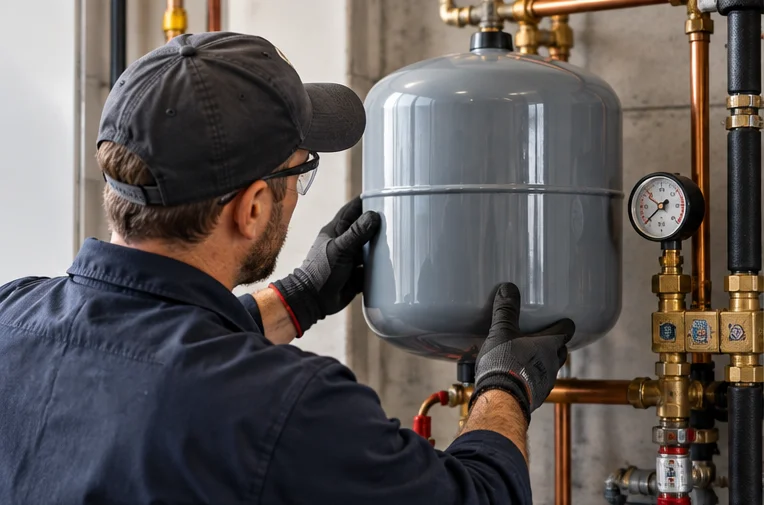
Expansion tanks are easy to overlook until they stop doing their job.
As boiler water heats, it expands. The expansion tank absorbs that additional volume and helps keep system pressure stable.
A failed, waterlogged or improperly charged tank can cause pressure to rise rapidly as the boiler heats.
Contractors may see symptoms including fluctuating pressure, relief-valve discharge or frequent pressure-related service calls.
Check the tank condition, connection and pre-charge where applicable.
3. Check Circulators and Zone Pumps
A boiler can fire perfectly and still fail to heat the building if water is not circulating properly.
After sitting through the cooling season, pumps should be inspected before continuous winter operation begins.
Check for:
- Unusual vibration
- Bearing or motor noise
- Leakage
- Seized pumps
- Proper flow direction
- Correct pump operation during a call for heat
On multi-zone systems, confirm that each circulator responds correctly when its corresponding thermostat calls.
4. Test Zone Valves and Controls
Heating controls deserve the same attention as the boiler itself.
Test every thermostat and heating zone individually.
Confirm that:
- Thermostats generate the correct call for heat
- Zone valves open and close completely
- End switches operate correctly
- Circulators respond as intended
- Boiler enable signals are being received
- The system shuts down correctly after the call is satisfied
Intermittent control problems that go unnoticed in September have a habit of becoming emergency calls in January.
5. Inspect Venting and Combustion Air
Venting systems should be carefully inspected before putting a boiler back into heavy service.
Look for problems such as damaged venting, disconnected joints, improper terminations or obstructions.
Exterior intake and exhaust terminations should also be checked for anything that could restrict airflow.
Leaves, debris, nests and other obstructions can accumulate during warmer months.
For condensing equipment, also inspect condensate drainage and make sure condensate can leave the appliance properly.
6. Clean and Inspect the Heat Exchanger
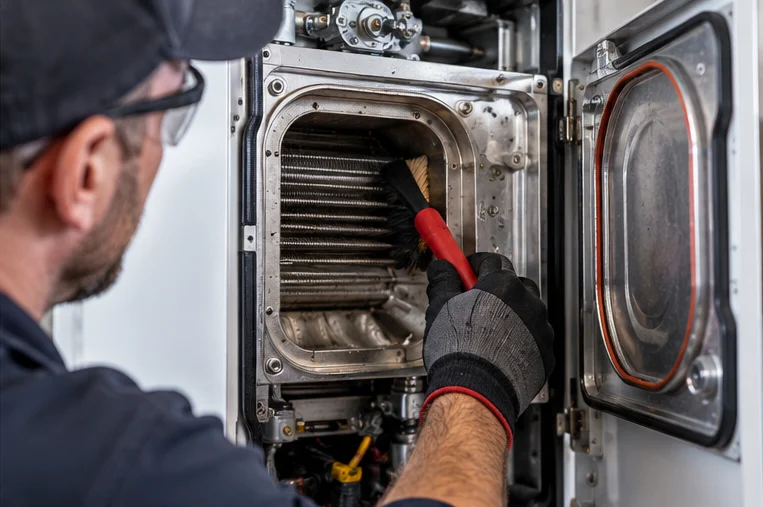
The condition of the heat exchanger directly affects heat transfer and boiler performance.
Inspect the combustion chamber and heat exchanger according to the manufacturer’s service procedures.
Deposits or contamination can reduce performance and may indicate combustion or maintenance issues that require further investigation.
Condensing boilers in particular should be serviced according to the manufacturer’s recommended maintenance procedure rather than treated like traditional cast-iron equipment.
7. Check Ignition and Flame Operation
Do not assume that a boiler firing means everything is operating correctly.
Observe the complete ignition sequence.
Confirm that the boiler starts reliably, establishes flame correctly and continues operating without nuisance lockouts.
Where required, combustion testing should be performed using appropriate instrumentation and according to the manufacturer’s specifications.
The objective is not simply to make the boiler run.
It is to verify that it is operating as the manufacturer intended.
8. Inspect the Condensate System
High-efficiency condensing boilers produce condensate during operation.
Before heating season, inspect the entire condensate path.
Check:
- Drain tubing
- Traps
- Connections
- Neutralizers where installed
- Drain termination
A blocked condensate line can cause shutdowns that appear to be unrelated boiler faults.
It is a small component with the ability to take the entire heating system offline.
9. Purge Air From the Hydronic System
Air trapped inside a hydronic system can create noise, reduce circulation and prevent portions of the system from heating properly.
Listen for gurgling or rushing-water sounds and confirm that air elimination components are functioning correctly.
Inspect automatic air vents, separators and purge points.
After any major system work, contractors should also verify that the system has been completely purged before leaving the site.
10. Check Water Quality
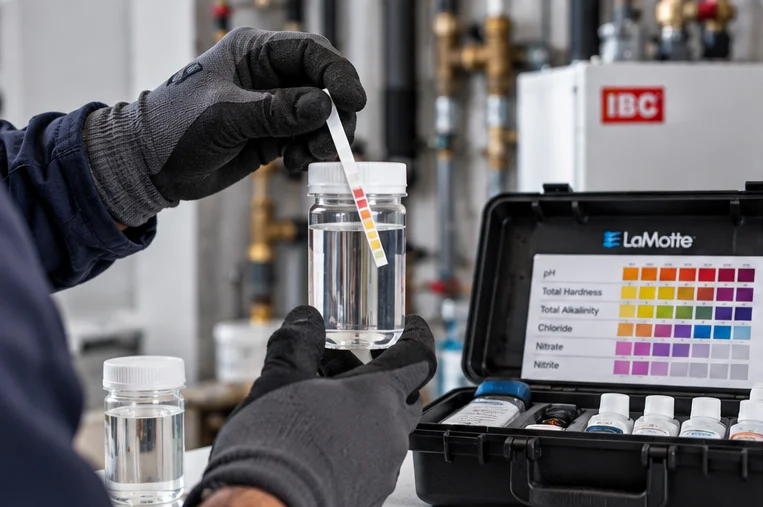
Modern hydronic equipment often contains smaller waterways and more sophisticated heat exchangers than older boiler systems.
That makes water quality increasingly important.
Contaminants, scale, corrosion products and debris can restrict heat transfer or affect components throughout the system.
Contractors should consider the condition of the existing system water, especially when installing a new boiler onto an older hydronic distribution system.
Flushing, filtration or water treatment may be required depending on the installation and manufacturer requirements.
11. Verify Outdoor Reset Settings
Many modern boiler systems use outdoor-reset controls to adjust supply-water temperature according to outdoor conditions.
When configured properly, the boiler does not need to produce maximum-temperature water every time there is a call for heat.
Before the season begins, confirm that outdoor sensors are functioning and control parameters are appropriate for the system.
Incorrect settings can lead to poor comfort, unnecessary cycling or reduced efficiency.
12. Inspect the Entire Hydronic Distribution System
Do not stop at the boiler.
The appliance is only one part of the heating system.
Inspect associated components such as:
- Isolation valves
- Check valves
- Air separators
- Mixing valves
- Manifolds
- Piping connections
- Radiators
- Fan coils
- In-floor heating components
Look for leaks, corrosion or signs of previous water damage.
A perfectly operating boiler cannot compensate for a poorly performing distribution system.
Catch Problems Before Heating Demand Peaks
Pre-season boiler service is about more than avoiding breakdowns.
It gives contractors an opportunity to identify worn components, correct system problems and verify that the complete hydronic system is ready for another Ontario winter.
It also gives contractors something extremely valuable during heating season:
time.
Finding a failing circulator, control or expansion tank in September is very different from discovering it during a no-heat call on one of the coldest nights of the year.
Need Help With Boiler or Hydronic Equipment Selection?
Nordics supports HVAC contractors with boiler, hydronic and heating equipment for residential and commercial applications.
Whether you are replacing an existing boiler, matching system components or planning a new hydronic installation, our team can help with product selection, availability and technical support.
Contact Nordics before heating season gets busy.