For a long time, many HVAC contractors judged suppliers by one simple question: who has the equipment and who has the price?
That worked when jobs were simpler, systems were more familiar, and project expectations were lower. But the HVAC industry has changed. Contractors are now dealing with tighter timelines, higher customer expectations, more advanced equipment, new refrigerants, heat pump adoption, ventilation requirements, rooftop unit replacements, VRF projects, hydronics, controls, and more complicated residential and commercial applications.
The reality is blunt: equipment alone is not enough anymore.
A contractor can buy a good heat pump, rooftop unit, furnace, ERV, boiler, tankless water heater, or VRF system and still lose money on the job if the planning is weak, the product is wrong, the delivery is late, or the installation team is not properly supported.
That is where the difference between a regular supplier and a serious HVAC distribution partner becomes obvious.
For HVAC contractors across Ontario, success increasingly depends on the full support system behind the equipment: training, product knowledge, inventory, logistics, delivery, application support, and reliable communication from quote to installation.
The HVAC Industry Is Getting More Technical
The HVAC industry is not standing still.
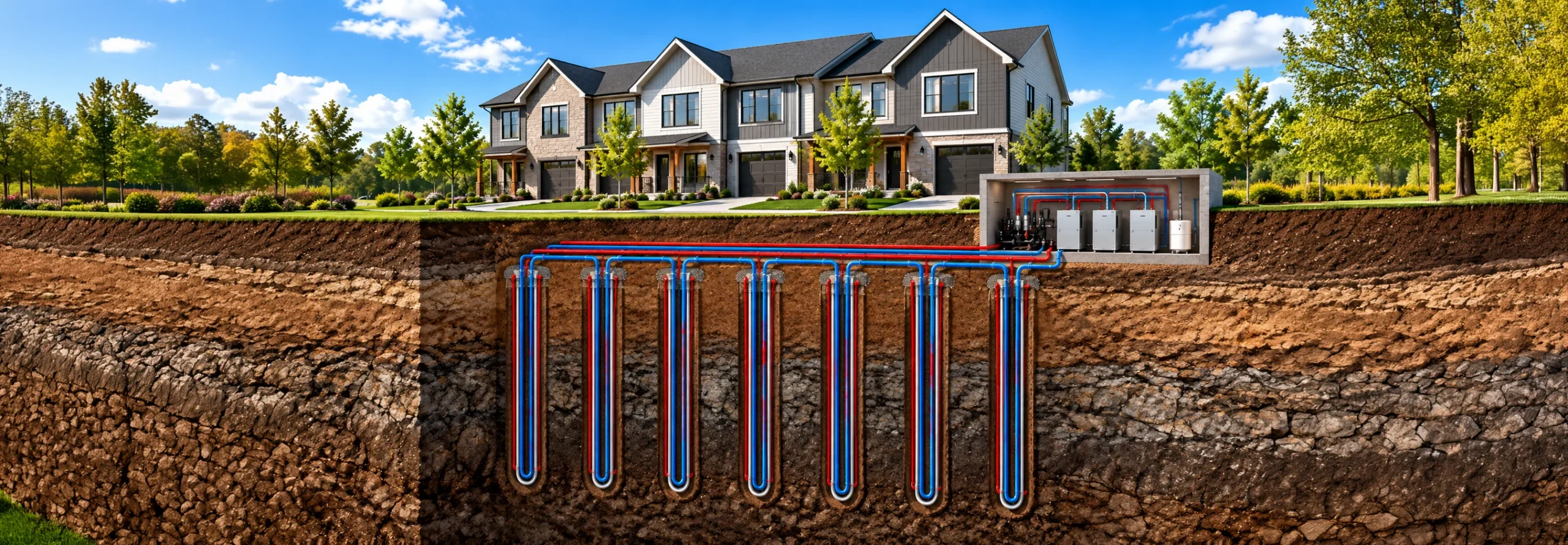
Cold-climate heat pumps are becoming more common. Commercial rooftop units are being selected with more attention to efficiency, capacity, and long-term operating cost. VRF systems are being used in more commercial and mixed-use buildings. ERVs and ventilation products are no longer side items. Hydronic systems, boilers, indirect tanks, and air-to-water heat pumps require stronger design thinking.
For contractors, this creates opportunity. But it also creates risk.
The contractor who understands the system wins. The contractor who only swaps boxes eventually runs into problems.
Modern HVAC projects are no longer just about matching equipment size and moving on. Contractors need to understand application, building type, load requirements, airflow, controls, installation conditions, service access, warranty expectations, and how the selected equipment fits the actual project.
This matters whether the job is a residential heat pump replacement, a new ductless installation, a commercial rooftop unit swap, a boiler room upgrade, or a larger VRF project.
The better the contractor understands the product, the cleaner the job becomes.
Product Training Is Becoming a Real Competitive Advantage
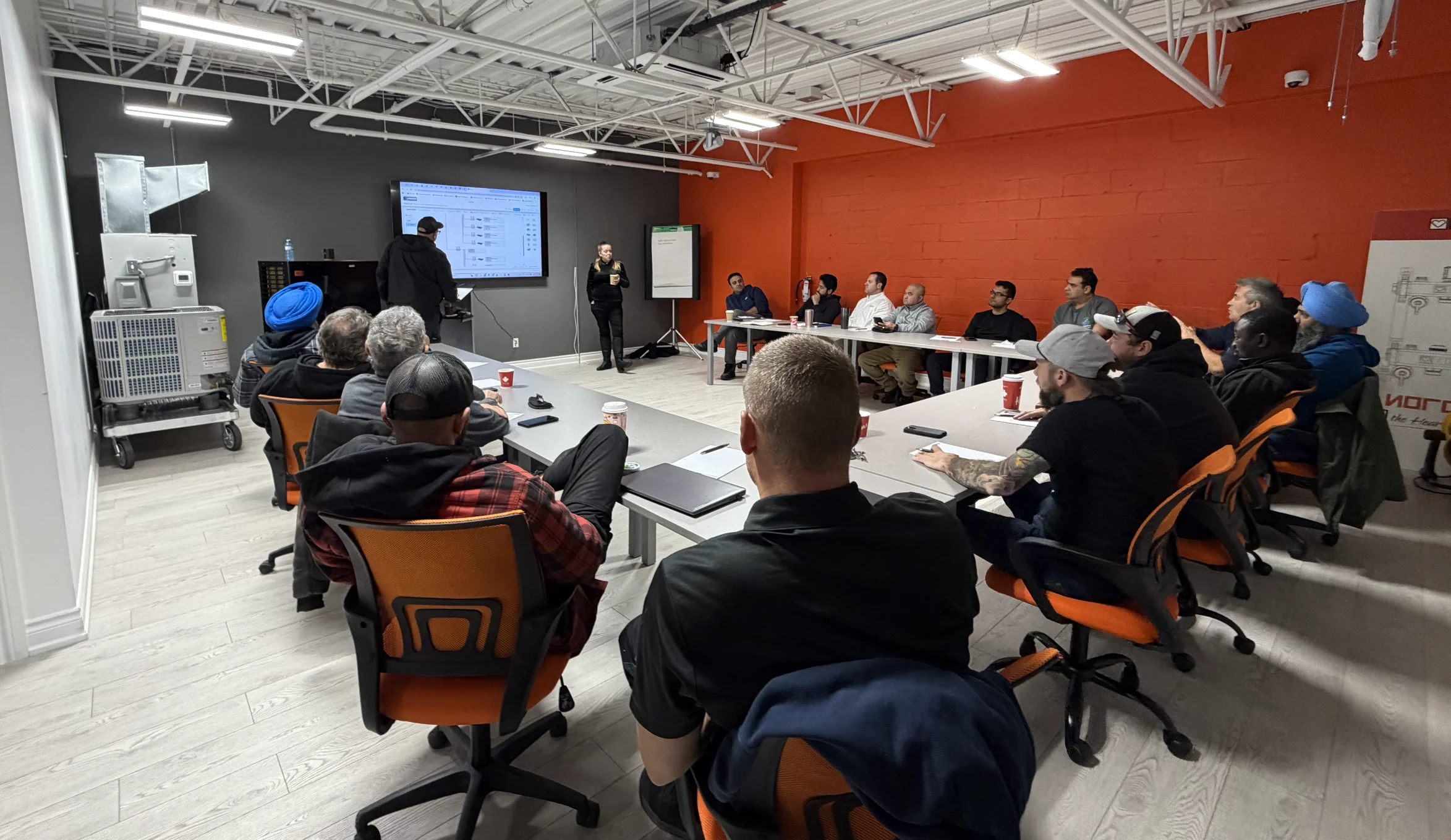
Training is not just something manufacturers and distributors offer to look helpful. For HVAC contractors, it is becoming a direct business advantage.
A contractor who understands a product line can quote with more confidence, explain options better, avoid wrong selections, install faster, and reduce callbacks. That affects profit directly.
Callbacks are not small problems. They waste labour, damage reputation, interrupt scheduling, and reduce the profitability of jobs that looked good on paper. Many callbacks are not caused by bad equipment. They are caused by weak product knowledge, poor application, rushed installation, or missing details during setup.
Training helps contractors avoid those mistakes before they happen.
For example, cold-climate heat pumps require contractors to understand performance at low outdoor temperatures, backup heat strategy, line set requirements, control settings, defrost behaviour, and customer expectations. Commercial rooftop units require attention to curb compatibility, capacity, economizers, electrical details, controls, ventilation, and site access. VRF systems require even more planning around piping, indoor unit selection, communication wiring, controls, and commissioning.
These are not minor details. They are the job.
Contractors who invest in HVAC training are not just learning product features. They are protecting their margins.
Inventory Matters More Than Contractors Admit
Price is easy to compare. Availability is harder to replace.
In the HVAC industry, inventory can decide whether a contractor wins or loses a project. If the equipment is not available when the contractor needs it, the quote becomes weaker, the schedule gets delayed, and the customer may move on.
This is especially true during peak heating and cooling seasons. Contractors already deal with labour pressure, customer pressure, weather pressure, and schedule pressure. Waiting on equipment creates another problem they do not need.
Reliable inventory gives HVAC contractors confidence. It allows them to quote jobs properly, schedule crews with less guesswork, and respond faster when customers are ready to move.
This applies across product categories: heat pumps, furnaces, air conditioners, rooftop units, ERVs, boilers, tankless systems, air handlers, coils, thermostats, and accessories.
The contractor who can get the right equipment at the right time has a real advantage over the contractor who is still waiting for answers.
Delivery and Logistics Can Make or Break the Job
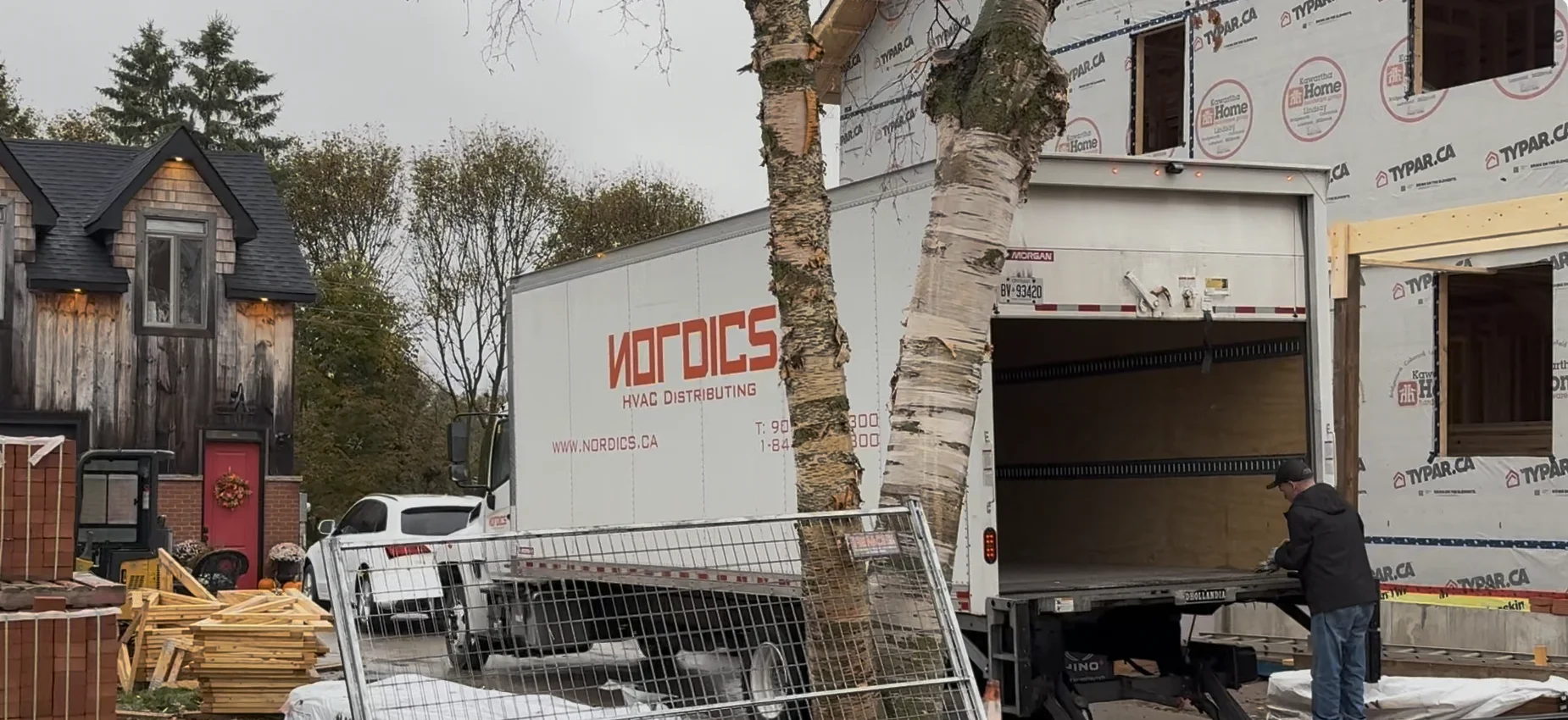
A lot of contractors focus on the equipment quote and forget how much logistics affects the final result.
Delivery is not just dropping a box at a location. On commercial jobs, rooftop units may require coordination with cranes, site access, building management, installers, and project schedules. On residential jobs, timing still matters because crews need the equipment when they are ready to install, not three days later.
Poor delivery coordination creates downtime. Downtime costs money.
When a crew is waiting on equipment, the contractor is losing time. When the wrong product arrives, the job slows down. When delivery is unclear, the contractor ends up managing problems instead of managing work.
Strong logistics support gives contractors more control. It helps them plan labour, protect schedules, and reduce unnecessary stress on the job site.
For residential and commercial HVAC contractors, delivery is not an afterthought. It is part of project execution.
Better Support Leads to Better Quotes
Contractors do not only need support after the sale. They need support before the quote.
A strong HVAC distributor helps contractors choose the right equipment for the application. That matters because the wrong product can make the contractor look unprofessional, even when the mistake started during selection.
Before quoting, contractors may need help comparing product options, checking availability, understanding capacity, reviewing accessories, confirming compatibility, or identifying better alternatives. This is especially important when the project involves heat pumps, VRF systems, rooftop units, hydronics, ERVs, or commercial equipment.
A better quote is not always the cheapest quote. A better quote is the one that matches the project properly and gives the contractor confidence that the system can be installed, supported, and serviced correctly.
That confidence matters when speaking with builders, property managers, business owners, consultants, and residential customers.
Contractors Need Partners, Not Just Order Takers
There is a big difference between a supplier who only processes orders and a distributor who actually supports contractors.
Order takers ask what model number you want.
Good partners help confirm whether that model makes sense.
Order takers tell you if something is in stock.
Good partners help you plan around inventory, lead times, delivery, accessories, and project requirements.
Order takers disappear after the sale.
Good partners stay involved when contractors need product information, training direction, warranty guidance, or technical support.
This difference matters more as HVAC systems become more advanced. Contractors do not have time to chase basic answers from five different places. They need clear communication and practical support.
In a competitive HVAC market, contractors who build relationships with the right distributor can move faster and make better decisions.
Residential and Commercial Contractors Face Different Pressures
Residential HVAC contractors usually deal with speed, comfort, trust, and clean execution. Customers often want answers quickly, especially when replacing heating or cooling equipment. Contractors need product options that fit the home, the budget, the available space, and the customer’s expectations.
Commercial HVAC contractors face a different kind of pressure. They may be dealing with building owners, tenants, engineers, property managers, general contractors, crane schedules, rooftop access, ventilation needs, and tighter project documentation.
Both sides need support, but not always the same support.
Residential contractors need product clarity, fast availability, strong brand options, and practical installation support.
Commercial contractors need deeper coordination, equipment selection support, logistics planning, and confidence that the product can meet the demands of the building.
A distributor that understands both residential and commercial HVAC work can help contractors avoid costly mistakes.
The Contractors Who Adapt Will Win
The HVAC contractors who keep treating every job like a simple equipment replacement will struggle. That is not an insult. It is just where the market is going.
Customers are asking more questions. Buildings are becoming more complex. Equipment is becoming more advanced. Efficiency expectations are rising. Heat pumps, rooftop units, ERVs, VRF systems, hydronics, and controls all require stronger knowledge than basic box replacement.
The contractors who adapt will win better jobs.
They will quote more confidently. They will reduce mistakes. They will build stronger customer trust. They will protect margins. They will take on larger and more profitable projects because they have the support system behind them.
The contractors who do not adapt will keep competing mainly on price. That is a weak position.
Nordics Supports Contractors Beyond the Equipment
At Nordics, the focus is not only on supplying HVAC equipment. The goal is to support contractors with the products, training, inventory, logistics, and project support they need to complete better residential and commercial jobs.
From heat pumps and rooftop units to VRF systems, furnaces, air conditioners, ERVs, boilers, tankless water heaters, hydronics, generators, and accessories, contractors need access to the right equipment and the right information behind it.
That combination matters.
When contractors have product knowledge, reliable inventory, proper delivery coordination, and a distributor that understands the job, they are in a better position to win projects and complete them properly.
In today’s HVAC industry, that is the real advantage.
Equipment matters. But equipment alone does not build contractor success.
Support does.