Modern homes are tighter than ever before. Better insulation, better windows, tighter construction methods, and stricter energy standards are making homes more efficient, but they are also trapping stale air inside the house.
And homeowners are starting to notice.
Rooms feel stuffy. Windows collect condensation in winter. Humidity becomes difficult to control. Air feels heavy after cooking. Basements smell damp even in newer homes. Some houses look beautiful but never actually feel fresh inside.
That is one of the biggest reasons ERVs are becoming a major part of modern residential HVAC design across Ontario.
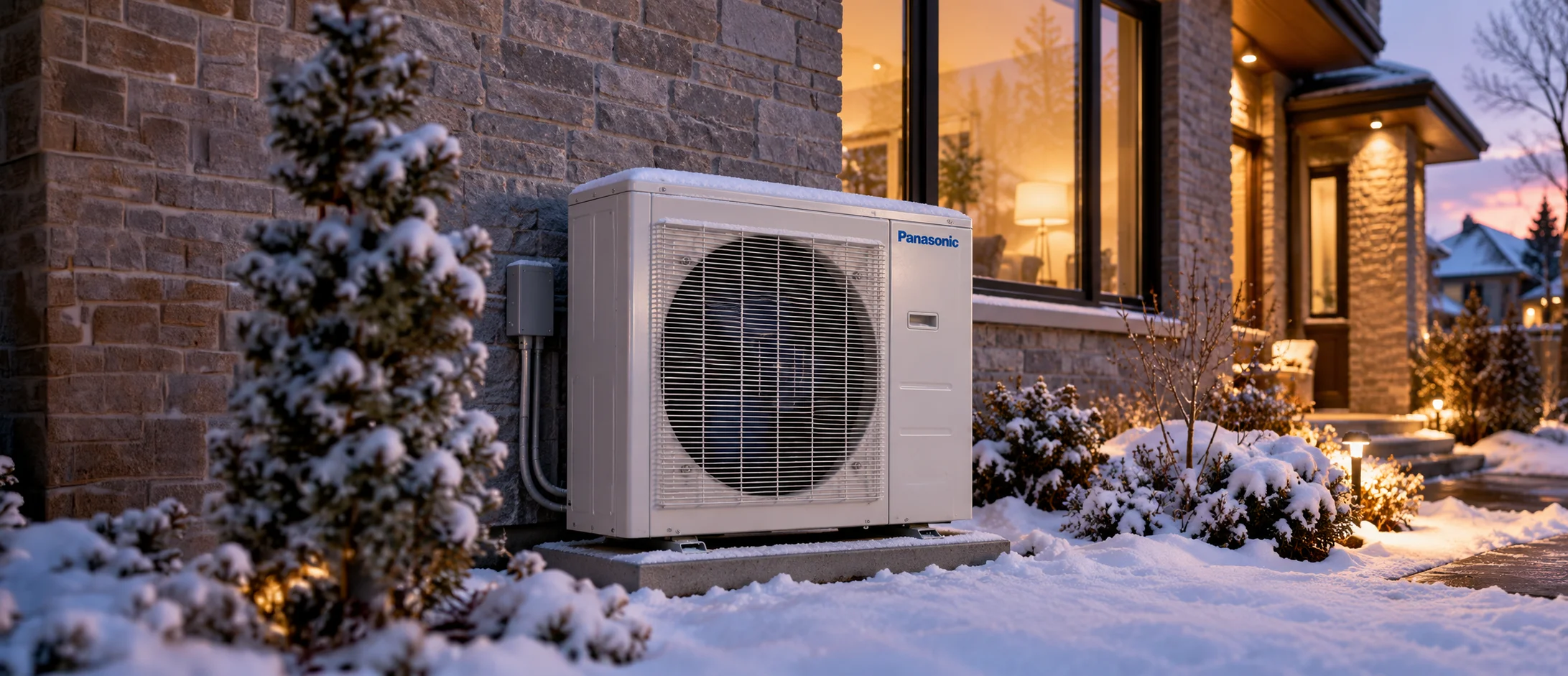
And for many contractors, Panasonic residential ERVs are becoming a go-to option because they solve real-world ventilation problems without creating installation headaches.
Modern Homes Work Differently Now
Older homes leaked air constantly.
Cold air came through windows, attics, doors, and wall assemblies whether homeowners liked it or not. It was inefficient, but it also created natural airflow throughout the house.
Today’s homes are completely different.
Modern construction focuses heavily on:
- Airtight building envelopes
- Reduced heat loss
- Higher efficiency
- Better insulation
- Improved comfort performance
That improves energy efficiency dramatically, but once you tightly seal a home, ventilation becomes far more important.
Without proper fresh air exchange, indoor air quality starts declining slowly over time.
Many homeowners assume poor air quality only happens in older homes. In reality, some newer homes struggle even more because there is very little natural airflow left in the structure.
Fresh Air Became Part of Comfort
A lot of homeowners think comfort only means temperature.
It does not.
You can have a perfectly sized heating and cooling system and still have a house that feels uncomfortable because the air inside feels stale, humid, dry, or heavy.
That is where residential ERVs play an important role.
An Energy Recovery Ventilator continuously exchanges stale indoor air with fresh outdoor air while transferring part of the heat and moisture energy between the two air streams.
In simple terms:
- stale air leaves the house
- fresh air enters the house
- energy loss is reduced during the exchange process
The goal is not just fresh air. The goal is controlled fresh air without wasting large amounts of heating or cooling energy.
That balance matters a lot in Ontario’s climate.
Ontario Weather Makes Ventilation More Important
Ontario creates difficult conditions for residential HVAC systems.
Winters are long and dry. Summers are humid. Temperature swings are aggressive. Homes stay closed for months during colder seasons.
Without proper ventilation, indoor conditions can become uncomfortable very quickly.
Some common issues homeowners notice include:
- condensation on windows
- excess humidity
- stale bedrooms overnight
- cooking odors that linger
- poor airflow between rooms
- dry indoor air during winter
- damp basement conditions
Many homeowners blame their furnace or thermostat first, but ventilation is often the real issue.
As homes become more energy efficient, ventilation becomes more important, not less.
Why Panasonic ERVs Are Gaining Attention
Contractors do not choose equipment based on marketing slogans. They choose products that make sense in real installations.
That is one reason Panasonic residential ERVs are becoming increasingly popular across Ontario residential projects.
They are practical.
Quiet Operation Actually Matters
Ventilation noise is one of the fastest ways to make homeowners unhappy.
A loud ERV running overnight beside a bedroom becomes annoying very quickly.
Constant humming, vibration, or loud airflow noises usually lead to callbacks sooner or later.
Panasonic ERVs are known for quiet operation, which makes a major difference in:
- custom homes
- condos
- townhomes
- finished basements
- smaller residential spaces
The best ventilation systems are usually the ones homeowners barely notice day to day.
Tight Mechanical Rooms Are Everywhere
Mechanical spaces are shrinking in modern homes.
Contractors constantly deal with:
- limited utility room space
- low basement ceilings
- narrow framing layouts
- packed mechanical closets
- difficult renovation conditions
Large ventilation equipment becomes frustrating quickly in those environments.
Panasonic ERVs work well in residential applications because their compact designs fit more naturally into tighter spaces without making installation unnecessarily complicated.
That becomes especially valuable during retrofit projects where contractors inherit all kinds of structural limitations.
Renovation Projects Changed the Conversation
New construction is not the only market driving residential ERV growth.
Renovation projects across Ontario are changing too.
Homeowners are finishing basements, improving insulation, replacing windows, and upgrading HVAC systems to heat pumps or higher-efficiency equipment.
But many older homes were never designed for modern airtight performance.
Once upgrades reduce natural air leakage, ventilation problems often start appearing.
That is why ERVs are becoming far more common in renovation projects today than they were even a few years ago.
Homeowners Are Asking Better Questions
A few years ago, many homeowners had never heard the term ERV.
Now they actively ask about:
- fresh air systems
- indoor air quality
- humidity control
- stale air
- condensation problems
- balanced ventilation
- healthier airflow
People spend more time inside their homes now. They notice comfort problems faster.
A home can have expensive finishes and premium HVAC equipment, but if the indoor air feels stale or uncomfortable, homeowners notice immediately.
The industry is shifting because homeowners are paying closer attention to how their homes actually feel to live in.
Heat Pumps Made Ventilation Even More Important
Ontario’s move toward heat pumps and electrification is also changing residential ventilation.
High-efficiency heat pump systems improve heating and cooling performance, but they do not solve indoor air quality problems on their own.
A tightly sealed house with a modern heat pump still needs balanced fresh air exchange.
Without proper ventilation:
- humidity becomes harder to manage
- indoor air can feel stale
- airflow becomes uneven
- comfort consistency drops
That is why ventilation is increasingly becoming part of the full comfort conversation rather than separate equipment hidden in the mechanical room.
Most Ventilation Problems Are Installation Problems
Many ventilation problems are not caused by the ERV itself.
They usually come from poor system design.
Bad duct layouts.
Improper airflow balancing.
Oversized ventilation setups.
Poor grille placement.
Installation shortcuts.
Even high-quality equipment performs poorly when the surrounding system is badly designed.
That is why experienced HVAC contractors pay close attention to:
- airflow balancing
- duct routing
- static pressure
- ventilation sizing
- service accessibility
Residential ventilation is becoming a real skill advantage in modern HVAC projects.
More Airflow Is Not Always Better
One of the biggest misconceptions in residential ventilation is the idea that more airflow automatically means better ventilation.
It does not.
Oversized ventilation systems can create:
- excessive dryness during winter
- pressure imbalance
- unnecessary noise
- uncomfortable airflow
- wasted energy
Good residential ventilation is about balance and consistency, not simply moving the highest amount of air possible.
That becomes especially important during Ontario winters when indoor humidity levels already become difficult to maintain.
Residential Ventilation Is No Longer Optional
The days of treating ventilation as secondary equipment are ending.
Modern homes need controlled fresh air exchange to maintain comfort, indoor air quality, and balanced humidity levels.
As Ontario homes continue becoming tighter and more energy efficient, ERVs are becoming a far more important part of residential HVAC system design.
Not because of trends.
Because modern homes genuinely need them.
Final Thoughts
Residential HVAC has changed significantly over the last decade.
Today’s homeowners care about more than heating and cooling capacity. They care about how their homes actually feel every day.
Fresh air.
Humidity control.
Noise levels.
Indoor air quality.
Comfort consistency.
Those factors are becoming just as important as temperature itself.
That is why ERVs are becoming essential in Ontario homes.
And for contractors working on modern residential projects, Panasonic ERVs are becoming a practical solution for delivering healthier, quieter, and more comfortable indoor environments year-round.